
FestTalk: Kerry Inman on 2026 FIFA Fan Festival
By: Phoebe Choi, FestForums® | August 3, 2026
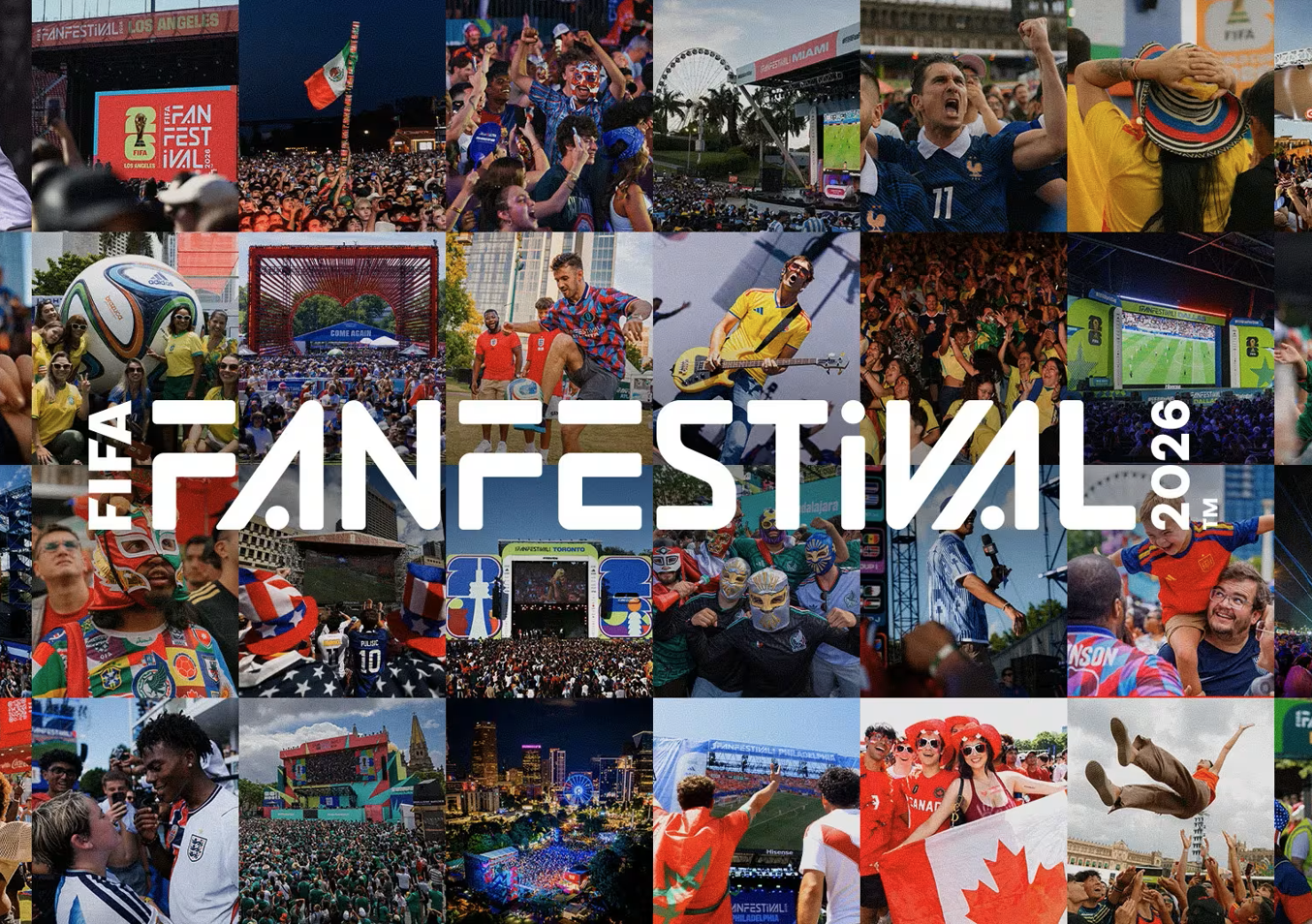
The FIFA Fan Festival is one of the largest live event programs on the planet. Launched in 2006 alongside the FIFA World Cup in Germany, it is the official free and ticketed fan experience that brings the World Cup to millions of supporters who do not have a match ticket, transforming public squares, waterfront parks, and city centers into global celebrations of football, music, culture, and community.
This year, over 9 million people attended the FIFA Fan Festival across 13 host cities in Canada, Mexico, and the United States over 39 days. Nearly 3,200 hours of programming. All 104 matches were shown live. More than 873 musical acts performed across every site, including Pitbull, The Chainsmokers, Imagine Dragons, BTS, Madonna, Coldplay, and Enrique Iglesias.
On the single biggest day of the tournament, 543,020 people showed up at FIFA Fan Festival venues at once. Attendees from 178 countries came through the gates in Kansas City alone. And 811 million digital video views were generated by Fan Festival content throughout the tournament.
Kerry Inman, FIFA Fan Festival Manager for FWC2026 US INC., helped bring this extraordinary program to life on the ground. For festival producers and live event professionals, her experience sits at the intersection of everything we talk about at FestForums®: large-scale operations, sponsor integration, community programming, safety, and what it truly means to build an experience that is accessible to everyone.
We sat down with Kerry to hear how it all came together and what the rest of the industry can take away from it.
This edition drew over 9 million visitors across 13 host cities, a record since 2006. What made it feel different, and what was the single biggest logistical challenge?
For many U.S. host cities, 2026 was their first real exposure to the scale and passion of a FIFA World Cup. Most naturally compared it to the Super Bowl because that was the biggest sporting event they knew. What they did not yet appreciate was that the World Cup is not one Super Bowl. It is the equivalent of hosting more than 30 Super Bowls over the course of a month, with passionate supporters following every match, not just the ones in their own city.
Our role was not to operate the Fan Festivals directly but to provide oversight, guidance, and operational support to the host cities. The biggest challenge was not moving equipment or coordinating logistics. It was helping our partners understand fan behavior and the importance of treating every match as a headline event, not simply as entertainment between local programming.
That led to many conversations around operating days, opening hours, staffing levels, and the overall scale of the Fan Festival experience. Because the events were funded locally, those decisions ultimately rested with each host city, and our role was to advise based on FIFA's experience from previous tournaments. Several host cities that initially reduced their operating schedules later told us they wished they had remained open for the full tournament. They saw firsthand that fans were showing up not just for their own national team, but to celebrate football every day.
For me, that is one of the biggest takeaways from FIFA World Cup 2026. It became a valuable case study for how football is experienced in the United States and how future events can better anticipate and embrace the passion of the global football community.
Each of the 13 sites was designed to reflect the culture and character of its host city. How do you balance a consistent FIFA Fan Festival experience with honoring local identity?
That is one of the most fascinating challenges of delivering a FIFA Fan Festival because you are balancing three distinct identities at once: the FIFA World Cup brand, FIFA's global commercial partnerships, and the unique culture of each host city.
FIFA did an incredible job establishing the foundation. The brand team developed host city-specific visual identities that complemented the overall World Cup look and feel while giving each city its own colors, patterns, and personality. Whether you were arriving at an airport, walking into a stadium, or visiting a Fan Festival, you immediately knew you were part of the FIFA World Cup, but you also knew whether you were in Seattle, Atlanta, or Miami.
Where my role came in was helping host cities navigate everything beyond the visual identity. One example I am particularly proud of was helping develop the framework for integrating local restaurants into the Fan Festivals. On the surface it sounds straightforward, but because FIFA has global food and beverage partners, every detail mattered. We had to determine how local restaurants could display their branding, what they could say in their marketing, how menus were presented, and how to ensure global commercial partner rights were always protected.
That was a project I really cared about because local businesses are what give a Fan Festival its soul. They do not just provide food. They tell the story of the city. The same was true with local musicians, performers, and cultural programming. Those elements transformed each Fan Festival from a standardized event into an authentic reflection of its community.
It would have been much easier to create 13 identical Fan Festivals, but they would have felt flat. By creating clear operational guidelines while giving host cities room to showcase their own food, music, art, and culture, we maintained the integrity of the FIFA World Cup brand while ensuring every Fan Festival felt distinctly local. I think that is one of the reasons fans embraced them so enthusiastically. Each city felt like a celebration of both football and the community hosting it.
With 113 commercial partner activations and over 873 musical acts performing across all sites, how do you approach programming at that scale?
The starting point for every FIFA Fan Festival was always the same: the football. The matches were our north star, and every other element of the program, from entertainment and ceremonies to commercial partner engagements, was built around them.
Once we had the match schedules, we worked with each host city to build detailed programming templates that identified every available programming window throughout the day. From there, we developed run sheets timed down to the second, ensuring opening ceremonies, FIFA content, commercial partner engagements, and match broadcasts all happened exactly when they were supposed to.
Of course, no live sporting event ever runs exactly to schedule. Matches can be delayed by weather, go into extra time or penalties, and every change creates a ripple effect across the day's programming. During the tournament, I worked in the Tournament Operations Center, where one of my key responsibilities was helping coordinate and communicate those changes in real time. We were constantly updating host cities, commercial partners, communication teams, and other FIFA functional areas so everyone stayed aligned and fans experienced a seamless event, even when the schedule was changing around them.
What made the Fan Festival unique was that it was not just a sporting event or a music festival. It was both happening simultaneously. Beyond the live programming, we also worked closely with FIFA's Communications and Content teams to identify moments that deserved a global audience, from Ludacris performing in Atlanta to astronauts from the International Space Station making a surprise appearance in Houston.
At that scale, success comes down to communication. There are hundreds of moving pieces, but if everyone understands the priorities and has the right information at the right time, what looks effortless to the fan is actually the result of thousands of coordinated decisions happening behind the scenes.
As live events continue to evolve and audiences expect more immersive and culturally relevant experiences, what does the future of the FIFA Fan Festival look like to you?
Football will always be the heart of the Fan Festival. Every decision should continue to revolve around the matches because that is what brings people together in the first place. But I think the Fan Festival is evolving into something much bigger than a place to watch football on a giant screen.
As the tournament reaches new audiences in countries like the United States and Canada, I think we will see Fan Festivals become increasingly immersive and experiential. Fans want to do more than watch. They want to participate. They want to explore the culture of the host city, interact with the game, discover local food, enjoy live music, and create memories that extend beyond the final whistle.
One of my favorite developments in 2026 was giving host cities more opportunities to showcase their own identity. Every city had a different story to tell, whether through local restaurants, artists, performers, or community programming. Those local touches did not compete with the FIFA experience. They enriched it. They gave visitors a reason to experience not just the World Cup, but the city itself.
What surprised me most this summer was seeing how naturally people from every corner of the world came together. Fans who did not share a language were dancing together. Families wearing different national team jerseys were eating together. Complete strangers were celebrating goals together. In a time when the world can feel increasingly divided, the Fan Festival became a place where people focused on what they had in common instead of what made them different.
To me, that is the real future of the FIFA Fan Festival. It is no longer simply a venue to watch football. It is becoming a global gathering place that celebrates sport, culture, hospitality, and human connection. If we continue to build on that foundation, the legacy of the Fan Festival will not just be measured by attendance figures. It will be measured by how it helps host cities share their culture with the world and how it brings people together through a shared love of the beautiful game.
I feel incredibly fortunate to have been part of that journey. I genuinely believe the FIFA Fan Festival has become one of the most powerful expressions of what the FIFA World Cup can represent, and I am excited to see how it continues to evolve.
Want to hear more conversations like this one? FestForums® brings together the most influential voices in live events, festivals, and entertainment every year in Santa Barbara. Visit festforums.com to learn more about FestForums® 2027.